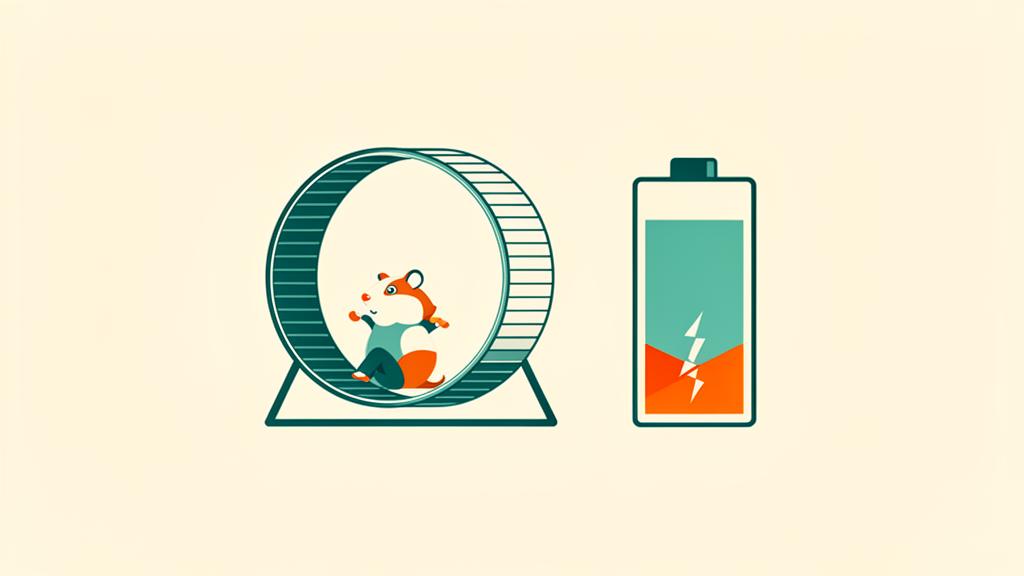
Why Organizations Burn Out
In the previous introduction, I wrote about the V-formation of migratory birds. This time, I want to dig deeper into the underlying question: "Why do organizations burn out in the first place?"
This is a topic that carries quite a bit of personal pain for me.
When I Was Inside the Hamster Wheel
During the period I was leading a team as an engineer, I was deeply committed to short-term results.
Quarterly goals would arrive, and once achieved, the next set would drop in. The more I delivered, the higher the expectations grew. The faster I ran, the faster the wheel spun. The classic "hamster wheel."
At the time, I thought this was normal. Results were expected. So I delivered. Then moved on to the next. What could possibly be wrong with that?
But looking back, something was clearly missing.
There was no "why" anywhere.
Numbers were going up. The team was functioning. But it felt hollow, and the sense of fulfillment at each achievement kept fading. Rest felt like guilt. Stopping felt like falling behind. The feeling of being chased by something never went away.
I now realize this was a "depletion of meaning."
The Real Source of Exhaustion Isn't Physical -- It's Meaning
When people talk about organizational exhaustion, the usual suspects come up: "too much work," "not enough people," "too much overtime." And yes, those are real problems.
But what I've personally experienced is something slightly different.
Even when the workload is heavy, people can push through if they understand "why this matters." Conversely, even when the workload is reasonable, if people can't see "what this is all for," they gradually wear down.
When you only face short-term results, this "context of meaning" tends to fall away.
Focusing on chasing the numbers right in front of you makes it hard to find meaning in the process itself. Everything becomes a binary of "achieved or not achieved," and the trial-and-error and learning that happen in between become invisible.
When I hit my own "battery dead" moment, I was squarely inside this structure. It wasn't that my physical energy ran out -- meaning ran out first.
The Unspoken Assumption: "Everyone Sprints All the Time"
There's another thing that tends to be overlooked when thinking about organizational exhaustion.
Many organizations implicitly assume that everyone should be running at full speed, all the time.
When you think about it, this is a remarkably abnormal design.
Even marathon runners pace themselves. Soccer players have benches. Yet in organizations, everyone is somehow expected to run at the same intensity simultaneously. How many workplaces have an atmosphere where someone can say, "I'm going to ease up this month"?
I went through a phase as a team leader where I believed "I need to be the one running hardest at the front." I was convinced that leading from the front was the leader's job.
But that was the exact opposite of the migratory bird formation.
In a flock of migratory birds, the shared understanding is that being at the front has a cost. That's why a rotation mechanism is built in from the start. The design is never "everyone flies at full power all the time."
What our organizations might be missing isn't "more effort" but "rotation by design."
What Has Management Theory Been Looking At?
Let me briefly touch on existing management theory here.
How has traditional management approached organizational exhaustion? Broadly speaking, it's centered on two things: "motivation management" and "compensation design."
Burned out? Let's boost motivation.
Turnover rising? Let's review compensation.
I don't think these are wrong. But both approaches adjust how people run without questioning the premise of running continuously.
They're adjusting the wheel's rotation speed without touching the structure of the wheel itself.
This is what had been bothering me for years.
Maybe the problem isn't "how to run" but "what formation to run in." If there were a system where people intentionally rotate between leading and recovering, couldn't we sustain both individual well-being and organizational progress?
It's still a hypothesis, but this question has been simmering inside me for a long time.
Are Short-Term Results and Long-Term Growth Really a Trade-Off?
I'll leave you with one final question.
Are "short-term results" and "long-term growth" truly a trade-off?
I'm starting to think that framing these two as opposing forces might itself be a trap. The V-formation of migratory birds achieves the group's forward progress (short-term results) and individual recovery (long-term sustainability) not as a trade-off but as a design that accomplishes both simultaneously.
In other words, this might not be a question of "which to prioritize" but of "how to design."
Next time, I'll take a closer look at the formations of migratory birds and sled dogs, and think more concretely about what this "design" actually looks like.
Previous article:
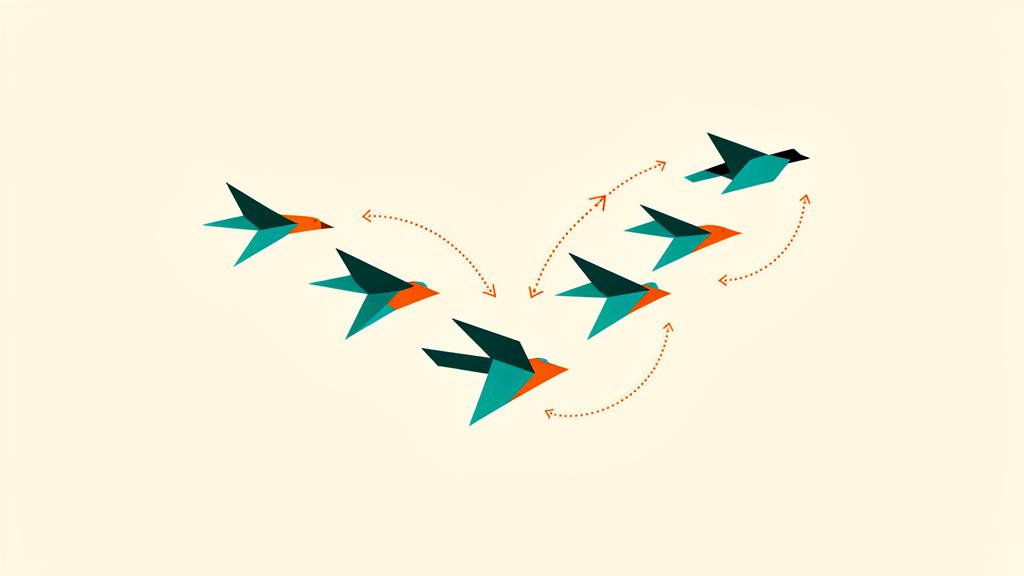
渡り鳥はなぜ飛び続けられるのか
Next article:
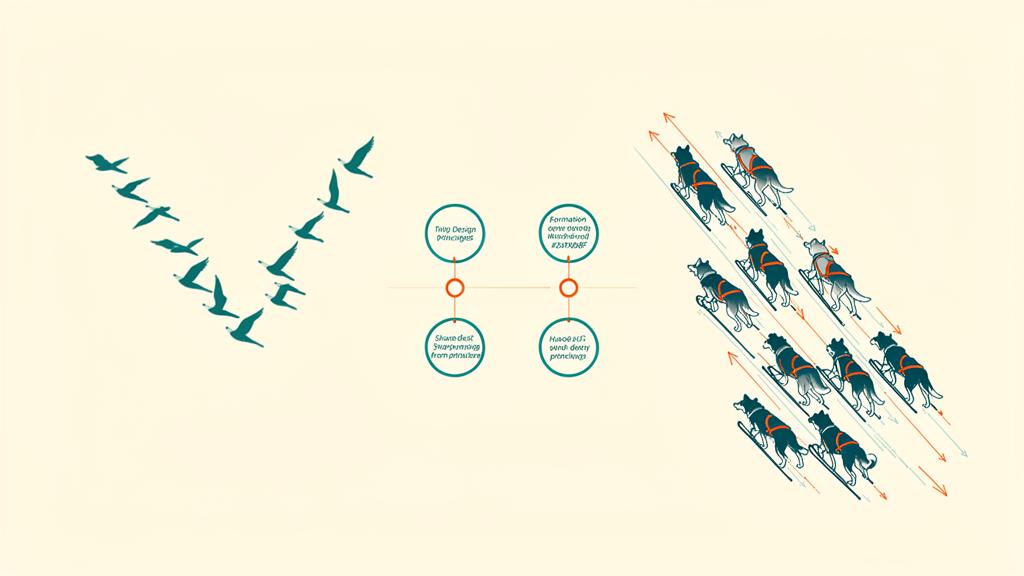
渡り鳥と犬ぞりに学ぶフォーメーションの設計
Was this article helpful?

If this article helped you organize your thoughts
a coffee-sized support would be much appreciated.
※ This is separate from tipping, but—
If you'd like to organize similar themes in your own context, I also offer dialogue sessions as a form of thought organization.
Recommended for you