Why Migratory Birds Never Stop Flying
Let me start with an honest confession: I'm not writing this series with all the answers already in hand.
There's something about organizations that has been nagging at me for years. Through dialogue and reflection, it started taking shape more clearly than I expected. But it's still at the hypothesis stage. So I thought I'd write it as a series, piece by piece, in the hope that we could think through it together.
Every autumn, migratory birds set out on journeys spanning thousands of kilometers.
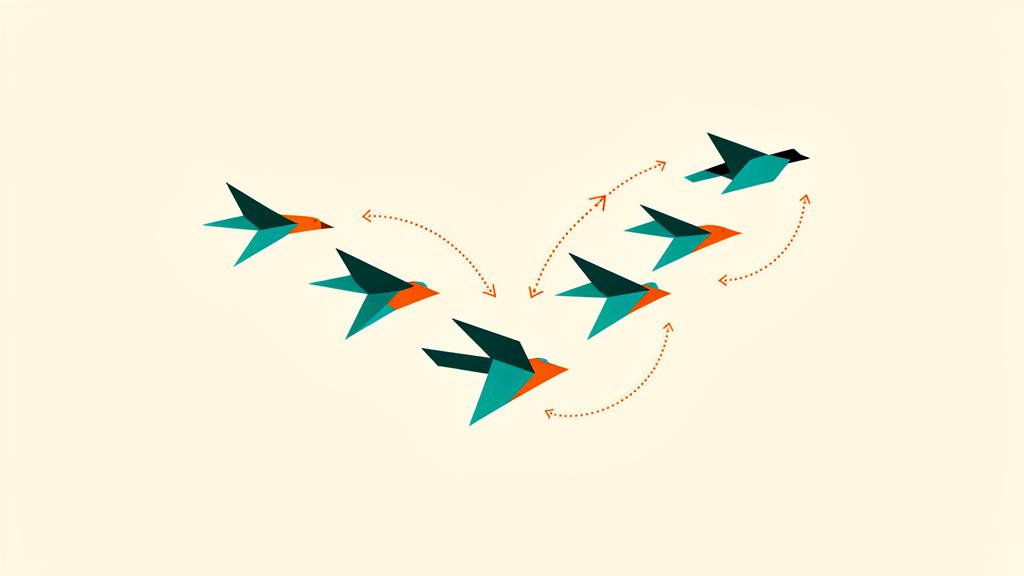
Watch their flight formation closely, and you'll notice they always fly in a V-shape. The lead bird takes the full force of wind resistance, while the birds behind conserve energy by riding the updraft. Research suggests that trailing birds use about 23% less energy than the one in front.
When the lead bird tires, it quietly drops to the back. The next bird takes the front.
This repeats, and the flock keeps flying without ever stopping.
Individuals take turns bearing the cost, sharing the exhaustion, while the group as a whole keeps moving forward. This isn't a miracle. It's design.
Now, what about our organizations?
Isn't the person working hardest also the one burning out fastest?
Outstanding managers burn out. Outstanding leaders leave. Each time, people say "they were special," and the same burden passes to the next person in line.
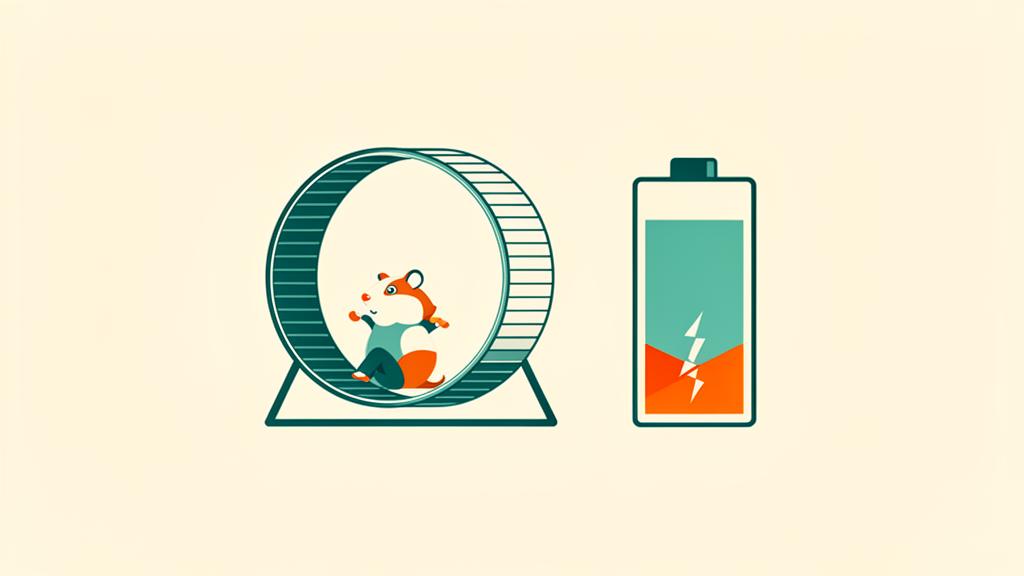
I've been caught in this structure myself. When I was leading a team as an engineer, I committed everything to delivering short-term results. And I did deliver. But before I knew it, I'd hit a wall -- batteries completely drained. Achievements felt hollow. Rest felt like guilt. The voice saying "I should do more" wouldn't stop.
Looking back, I think what I was experiencing wasn't physical exhaustion so much as a depletion of meaning.
When you only face short-term results, you lose sight of "what this is all for." Numbers go up, but something feels empty. Maybe some of you have felt this too.
Migratory birds don't fly that way.
Their formation has both short-term output (the group's forward progress) and long-term sustainability (individual energy recovery) built in from the start as a design feature.
Being at the front has a cost. So they rotate. Being at the back isn't slacking -- it's preparation for the next turn at the front.
Why hasn't this simple principle been applied to our organizations?
Sled dogs work the same way.
The lead dog expends the most energy and bears the responsibility of choosing direction. But they don't stay at the front forever. When tired, they rotate to the back, and another dog takes the lead. It's said that a musher's most important skill is knowing when to make these rotations.
Both migratory birds and sled dogs place the center of gravity of their design not on "who's in front" but on "how to rotate."
I believe this way of thinking holds a powerful clue for redesigning organizations.
In this series, I want to explore questions like these:
Why do organizations burn out? What can we learn from the formations of migratory birds and sled dogs? How can we design systems that give both "the person in front" and "the person in back" a name, a role, and recognition? And what internal shifts do leaders themselves need to make this possible?
Honestly, I don't have all the answers yet. I expect my thinking will deepen as I write.
But there's one thing I'm certain about:
The design of "everyone sprinting at full speed, all the time" has reached its limit.
Migratory birds may have known this thousands of years ago.
Next time, I'll dig deeper into "why organizations burn out" from a more structural perspective.
Next article:
なぜ組織は疲弊するのか

Was this article helpful?

If this article helped you organize your thoughts
a coffee-sized support would be much appreciated.
※ This is separate from tipping, but—
If you'd like to organize similar themes in your own context, I also offer dialogue sessions as a form of thought organization.
Recommended for you