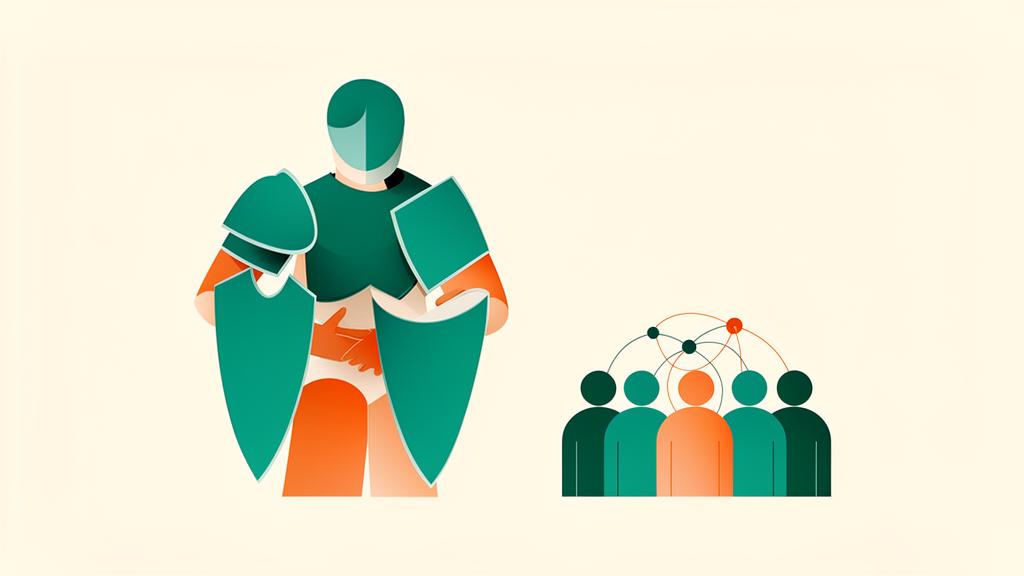
Taking Off the Manager's Armor: Connecting Kegan's Theory to Formation Design
In the previous article on two-layer compensation design, I left one unresolved thread at the end.
A manager's exhaustion is invisible to the team.
Even with well-designed systems, if this invisibility problem isn't addressed, the culture won't take root. This time, I want to face this question directly.
Let me start with something personal.
The Armor of "Must Be Strong"
When I was a team leader, there was one thing I firmly believed.
Leaders must never show weakness.
Always calm in front of the team. Never show hesitation in decisions. Absorb pressure from above without letting it reach the team. I thought that was the leader's job.
Looking back, that was armor.
Armor to protect the team, and armor to protect myself. I wanted people to think "we're safe following this person." I believed that showing anxiety would shake the team.
What happened as a result?
My exhaustion became invisible to the team. Being caught between stakeholders in meeting rooms. Walking a tightrope between executives and the front line. Replaying decision correctness alone at midnight. All of it became invisible.
What the team saw was just the surface: "an always-calm leader."
So when I collapsed from "battery dead," the team must have been surprised. Of course they were -- they couldn't see what was happening.
What Happens When Exhaustion Is Invisible
In the previous article, I drew a comparison with road cycling. Domestiques watch in real time as the ace nearly collapses at a mountain summit. Because exhaustion is physically visible, empathy emerges.
In organizations, this doesn't happen.
A manager's exhaustion progresses quietly in meeting rooms and one-on-ones, and team members only receive results. So a felt sense of "the cost of being at the front" never develops.
Without that felt sense, what happens?
Even if a Senior Supporter role is formally created, team members might see it as "that person moved to an easy position." If you don't understand how hard it is to be at the front, you can't understand the meaning of transitioning to the back.
Systems create the vessel. But culture is what fills it.
So how do you build that culture? This is where Robert Kegan's developmental theory connects.
Kegan's "Self-Transforming Mind"
Robert Kegan, a developmental psychologist at Harvard, argues that adult intelligence progresses through stages. I'll skip the detailed theory, but what matters here is the most mature stage: the "Self-Transforming Mind."
People at this stage can objectify their own values and identity. In other words, they're not trapped by the identity of "I am a manager" -- they can observe that role from the outside.
To put it more simply:
Many managers identify "being a manager" with "who I am." Title equals self. So losing the title carries the same weight as losing a part of yourself.
At the Self-Transforming Mind stage, you can distinguish between "myself playing the role of manager" and "myself." Roles are something you can put on and take off. Removing one doesn't change who you are.
That's what "taking off the armor" means.
Taking Off the Armor Isn't Showing Weakness
I want to be clear: "taking off the armor" doesn't mean simply venting or showing vulnerability.
What Kegan describes is more structural. It's a stage of intelligence where you can recognize what you're attached to and intentionally let it go.
When a manager tells the team "I'm significantly depleted right now," that's not weakness disclosure -- it's sharing the reality of the role.
"I'm carrying this much load right now. So I'd like to rotate at this point."
For someone to say this, two things are needed.
First: inner maturity. Being able to separate your title from yourself and judge "it's time to step back."
Second: organizational structures that receive this. Meaning a destination with a name, role, and compensation -- the Senior Supporter vessel.
Inner development (the ability to remove the armor) and system design (a role as a landing pad). Only when both are in place can rotation function as "transition."
Connection to Deliberately Developmental Organizations
In his book "An Everyone Culture," Kegan proposes the concept of a "Deliberately Developmental Organization" (DDO).
A DDO is one where everyone openly shares their weaknesses and challenges, and the organization deliberately treats these as growth opportunities.
I believe this concept connects deeply with formation-based organizational theory.
When managers become able to show the team "the cost of being at the front," that's not exposing weakness -- it's information sharing that enables the entire formation to function. Just as migratory birds sense the lead bird's exhaustion across the entire flock, a manager's state being visible to the team creates the trigger for rotation.
However, I think there's a necessary sequence here.
Telling managers "show your weakness" out of nowhere won't work. Before asking someone to remove their armor, you need to prepare a place for them to stand once they do.
Build the system first. Establish the Senior Supporter with its name, role, and compensation. Then create the psychological safety that says "it's okay to take off the armor."
Systems first, culture second. But ultimately, both are necessary.
Another Role for the Senior Supporter
Through this thinking, I've identified one more addition to the Senior Supporter's role definition.
Beyond "sounding board for new managers" and "passing down organizational context" from previous articles, there's "supporting the current manager through empathy born from having been at the front."
A Senior Supporter is someone who once wore the armor themselves. They know the pressure, loneliness, and exhaustion of leading from the front in their bones. That's exactly why they can deliver something unique to whoever is currently in the lead: "I understand what you're carrying."
This is a kind of support that someone without leadership experience simply cannot provide.
It's the same structure as road cycling, where the best domestiques can offer the greatest support precisely because they were once team leaders themselves.
What's Still Unclear
Honestly, the "formation-based organizational theory" I've been developing through this series isn't complete yet.
The skeleton of the system design is visible. The direction for culture is emerging. But for actual implementation, many unanswered questions remain.
"Who decides when rotation happens, and how?" "What's the right duration for a Senior Supporter period?" "How does the design change with organizational scale?"
But if I waited until all answers were in place, I'd probably never write at all.
In the next and final article, I'll integrate the discussions so far and paint the big picture. I also want to touch on how this thinking connects to the philosophy of Regenerative Leadership.
Previous article:
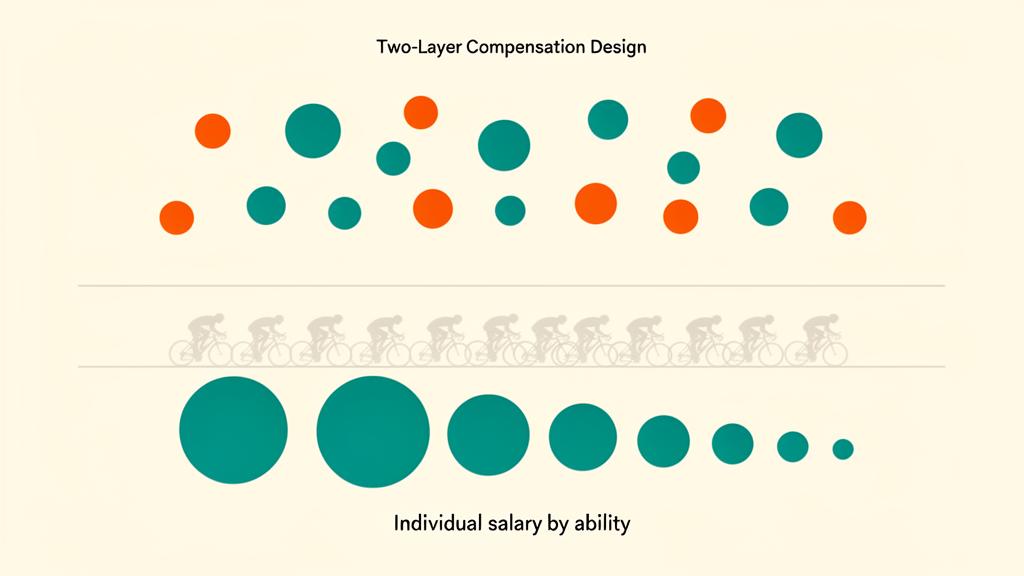
ロードサイクリングの報酬設計に学ぶ ― 2層構造の考え方
Next article:
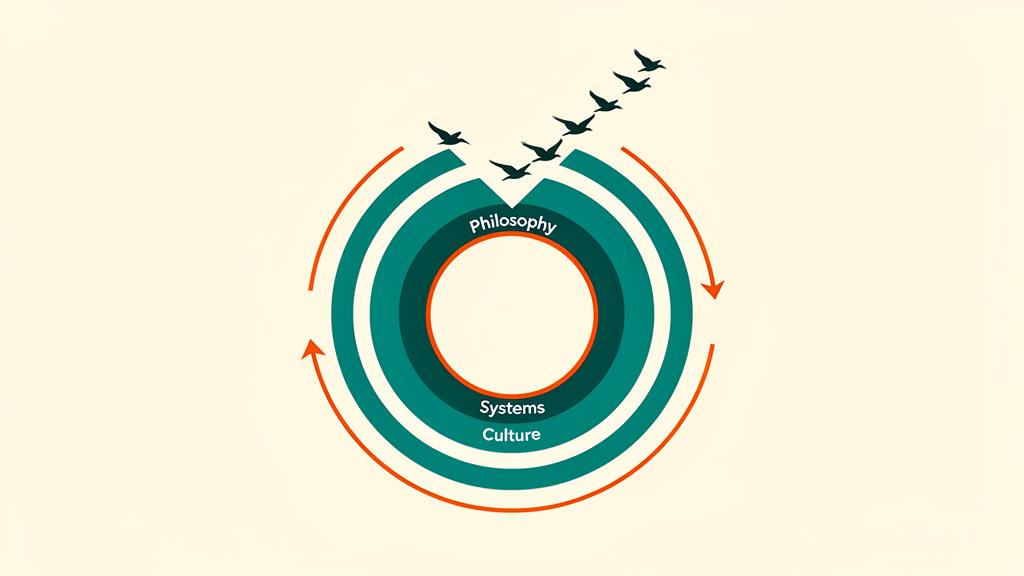
フォーメーション型組織論の全体像 ― リジェネラティブ・リーダーシップへの接続
Was this article helpful?

If this article helped you organize your thoughts
a coffee-sized support would be much appreciated.
※ This is separate from tipping, but—
If you'd like to organize similar themes in your own context, I also offer dialogue sessions as a form of thought organization.
Recommended for you