
The Importance of Reflection in Teal Organizations: Autonomous Decision-Making and Organizational Evolution
Hello, I'm Yuto Takashi, a specialist in reflection who transforms worries and anxieties into positive action.
I conduct research on organizational theory, particularly on reflection, and develop web services and host workshops. In this blog, I share insights on organizational theory and reflection practices, as well as IT automation tips drawing from my engineering career.
Today, I'd like to explore "The Importance of Reflection in Teal Organizations" in depth.
What is a Teal Organization?
First, let's briefly review what a Teal organization is. A Teal organization is a new organizational model proposed by Frederic Laloux, characterized by three features: self-management, wholeness, and evolutionary purpose.
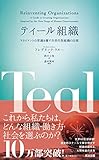
Reinventing Organizations: A Guide to Creating Organizations Inspired by the Next Stage of Human Consciousness
For more details on Teal organizations, please see the following article.

「ティール組織」と「アメーバ経営」 の意外な関係とは!?
The Importance of Reflection in Teal Organizations
Teal organizations differ significantly from traditional hierarchical organizations and are operated based on each individual's autonomy and sense of responsibility. In such an organizational structure, reflection plays a crucial role. Let's examine the importance of reflection in Teal organizations from five perspectives.
1. Enhancing Autonomous Decision-Making Capability
In Teal organizations, all members are expected to make appropriate decisions according to the situation. Reflection is an indispensable process for enhancing this autonomous decision-making capability.
Effects gained through reflection:
- Learning from past experiences
- Clarifying one's values and decision-making criteria
- Objective evaluation of the decision-making process
Through these effects, members can make more appropriate decisions aligned with the organization's purpose and values.
2. Ensuring Alignment with Organizational Purpose
To realize the "evolutionary purpose," one of the characteristics of Teal organizations, all members need to deeply understand the organization's purpose and act in accordance with it.
The role reflection plays:
- Confirming alignment between the organization's purpose and one's own values
- Reflecting on how daily actions contribute to the organization's purpose
- Generating new insights and proposals for the organization's purpose
Through regular reflection, members can confirm the alignment between the organization's purpose and their own actions and make course corrections as needed.
3. Expressing Wholeness
In Teal organizations, members are encouraged to bring their whole selves to the workplace. This is one of the characteristics called "wholeness."
Promoting wholeness through reflection:
- Deep understanding of one's strengths and weaknesses
- Cultivating whole-person judgment that includes emotions and intuition
- Self-awareness that enables sincere dialogue with others
By deeply understanding oneself through reflection, members can leverage their whole selves for the organization.
4. Continuous Learning and Growth
Teal organizations are organizations that constantly continue to evolve. For this, it is essential that each member continues to learn and grow continuously.
Learning and growth promoted by reflection:
- Extracting specific learnings from experience
- Clarifying one's growth challenges
- Motivation for new challenges
Through regular reflection, members can accelerate their learning and growth and contribute to the evolution of the entire organization.
5. Cultivating a Healthy Organizational Culture
For a Teal organization to function healthily, an organizational culture based on trust and transparency is essential. Reflection plays an important role in cultivating such a culture.
Impact of reflection on organizational culture:
- Fostering deep understanding and empathy for self and others
- Promoting open communication
- Exchanging constructive feedback
When all members make reflection a habit, a healthy organizational culture is formed where everyone respects each other and can exchange opinions frankly.
To Root Reflection in the Organization
Even if you understand that reflection is important in Teal organizations, it's not easy to actually root it in the organization. Here are some suggestions for establishing reflection as an organizational culture.
- Conducting regular reflection sessions: Hold weekly or monthly reflection sessions that all team members participate in.
- Utilizing reflection tools: Introduce tools that support effective reflection. For example, "RefCla," a service developed by TIELEC, is a tool that helps you face yourself naturally and supports effective reflection.
- Training reflection skills: Conduct organization-wide training on effective reflection methods.
- Creating opportunities to share reflection outcomes: Share insights and learnings gained from reflection within the organization to promote mutual learning.
- Leading by example: Leaders of the organization actively practice reflection and embody its importance.
Summary
In Teal organizations, reflection is not just a personal habit but an important foundation that supports the healthy operation and continuous evolution of the organization. For each member to make autonomous decisions and act in accordance with the organization's purpose, the attitude of constantly facing oneself and continuing to learn is essential.
Rooting reflection as an organizational culture may be difficult in the short term. However, in the long term, it should significantly improve the organization's adaptability and creativity and lead to the realization of a true Teal organization.
Why not try challenging yourself to create a culture that values reflection in your organization as well?
Finally, for those who want more specific methods of reflection or more detailed information, please see the following article.

誰でも深く内省ができるORIMDの仕組みとは!?
I sincerely hope that your challenge toward a Teal organization will be fruitful.
RefCla
For those who want to clarify their worries, anxieties, and vague concerns about the future. RefCla is a tool that supports people who want to transform their worries and anxieties into "positive action." It helps you face yourself naturally and supports effective reflection.
https://reflectioncloud.achireth.onl/
TIELEC aims to create a self-actualization society by improving reflection capabilities across society.
https://www.tielec.net/

Was this article helpful?

If this article helped you organize your thoughts
a coffee-sized support would be much appreciated.
※ This is separate from tipping, but—
If you'd like to organize similar themes in your own context, I also offer dialogue sessions as a form of thought organization.
Recommended for you