
How to Create a Lifeline Chart — Visualize Life's Turning Points and Find Your Next Step
Introduction
Hello, I'm Takashi Yuto, a specialist who helps transform worries and anxieties into positive action through introspection and reflection. My work is grounded in organizational theory research, and I develop web services and facilitate workshops.
On this blog, I share insights on organizational theory, reflection techniques, and IT automation—though not on a fixed schedule. My content is especially aimed at highly motivated professionals in their 20s to 40s, as well as anyone looking to resolve daily worries and anxieties.
https://www.tielec.net/
What is a Lifeline Chart? A Powerful Tool for Visualizing Life's Peaks and Valleys
A lifeline chart is a powerful tool for visualizing the trajectory of your life. It allows you to see at a glance how past events and experiences have shaped who you are today.
The Basics of a Lifeline Chart
A lifeline chart is a self-analysis tool with the following characteristics:
- Reflects on significant events and periods in your life
- Scores the fulfillment or happiness level of each event or period
- Expresses these scores as a graph
This makes it easy to identify the ups and downs and turning points in your life at a glance.
Example of Using a Lifeline Chart
I regularly create and review my own lifeline chart. When I actually created one, I gained insights such as:
- Experiences that sparked growth - Major growth occurred during periods when I overcame challenges and difficulties
- Life turning points - Milestones like education, employment, and career changes were clearly visualized
- Emotional waves - Patterns emerged showing periods of fulfillment and periods of struggle
By taking a bird's-eye view of your life through a lifeline chart, you can discover patterns and tendencies you hadn't noticed before.
The Close Relationship Between Lifeline Charts and Career Design
The Importance of Lifeline Charts in Career Consulting
Lifeline charts are widely used as a highly effective tool in the fields of career design and career counseling. Here's why:
- They allow you to visualize your past experiences
- They help clarify past emotions and values
- They serve as a reference for planning future career paths
From the Perspective of a Nationally Certified Career Consultant
I hold a national certification as a career consultant. In my training course, I learned in detail about the effectiveness and creation methods of lifeline charts.
In fact, the Ministry of Health, Labour and Welfare's official website provides information on lifeline charts as an effective career consulting technique.
▽Ministry of Health, Labour and Welfare's page on career consulting techniques (Japanese)
https://www.mhlw.go.jp/stf/seisakunitsuite/bunya/koyou_roudou/jinzaikaihatsu/career_consulting_gihou.html
When to Use a Lifeline Chart
Lifeline charts are particularly effective for:
- University students preparing for job hunting
- Working professionals considering a career change
- Anyone who wants to reflect on their career and values
By creating a lifeline chart, you can gain a deeper understanding of yourself and support better career decisions.
Share Your Lifeline Chart and Gain New Insights
New Perspectives Through Sharing with Others
Once you've completed your lifeline chart, I recommend sharing it with others as the next step. Suitable people to share with include:
- Trusted friends
- Family members
- Professionals such as career consultants
Through dialogue with others, you often become aware of perspectives and feelings that are difficult to notice on your own. This allows you to gain new perspectives and insights into the flow and choices of your life.
Utilizing Career Consultant Sessions
Career consultants can analyze your lifeline chart from a professional perspective and provide valuable advice and insights. Currently, various career consultation services exist:
- Free services
- Paid services
- Online consultations
- In-person consultations
If you want to resolve anxieties or questions about your career and future, dialogue with a professional can be very meaningful. If interested, please explore consultation services.
Your Personal History and Hints for the Future from Your Lifeline Chart
Your Personal History Revealed Through a Lifeline Chart
Creating a lifeline chart clarifies your personal history, including:
- The flow of your life
- Important turning points
- Moments of joy and setbacks
By visually confirming these, you can objectively understand your past and deepen your self-awareness.
Understanding Career Through "Tracks"
The word "career" originates from "carriage tracks" (ruts). From this perspective:
- The path of life is shown by the tracks you've made so far
- A lifeline chart is a tool to visualize those tracks
Through a lifeline chart, you can reflect on what kind of path you've walked and what kind of path you should walk going forward.
As Hints for Your Future Career
We're now said to be living in an "era of 100-year lifespans," where we're expected to shape and carve out our own careers. In this era:
- It's important to reflect on past experiences and learnings
- This is a crucial step for finding future direction
By utilizing a lifeline chart, you can think about and clarify the direction of your future life and career based on your past experiences.
A Practical Guide to Creating a Lifeline Chart
Here's a specific method for effectively creating a lifeline chart.
① Reflect on Your Life Episodes
The first step is to dig deep into your life and list important episodes and events.
Points for reflection:
- Organize by age or era
- Organize by significant life events
- Use a notebook or spreadsheet software (e.g., Excel) to organize information
Perspectives to consider:
- Turning points in life
- Results of achievements and challenges
- Memorable moments and experiences
- Events that had a strong impact on you
② Score the Satisfaction and Emotions of Each Event
Next, assign scores related to the emotions and satisfaction of each episode.
Points for scoring:
- Score range: -100 to +100
- Positive events: "+" rating
- Challenging or difficult periods: "-" rating
Notes on scoring:
- Recall the emotions and impressions at that time
- Reflect them honestly
- Base your evaluation on feelings such as happiness, excitement, sense of achievement, anxiety, doubt, and disappointment
③ Graph All Points
The final step is to create a graph.
Steps for creating a graph:
- Horizontal axis: Age
- Vertical axis: Satisfaction or emotion score
- Mark points corresponding to each episode
- Connect the marked points with lines
This completes your personal lifeline chart.
Introduction to the Lifeline Chart Google Spreadsheet Template
While creating a graph by hand is fine, using digital tools offers the following benefits:
- Easy to add new events you remember later
- Easy to modify the design
- Simple to save and share data
Therefore, I'm providing a lifeline chart template using Google Spreadsheet.
How to use the template:
- Access the link below
- Copy the sheet
- Customize and use it for yourself
★Lifeline Chart Google Spreadsheet★
https://docs.google.com/spreadsheets/d/10lwY5dYD78tYQfSvt39xiSnyYfiwVrjygrQ6VHxnTvk/edit#gid=0
Create a Lifeline Chart Online with Ease
TIELEC's web service "RefCla" (Reflection Cloud) now features a function to easily create lifeline charts online.
Steps to create a lifeline chart in RefCla:
- Open the menu
- Select "Life Navi"
- Select "Life Journey"
Using RefCla offers the following benefits:
- Create charts online
- Easily add events midway
- Simple to save and share data
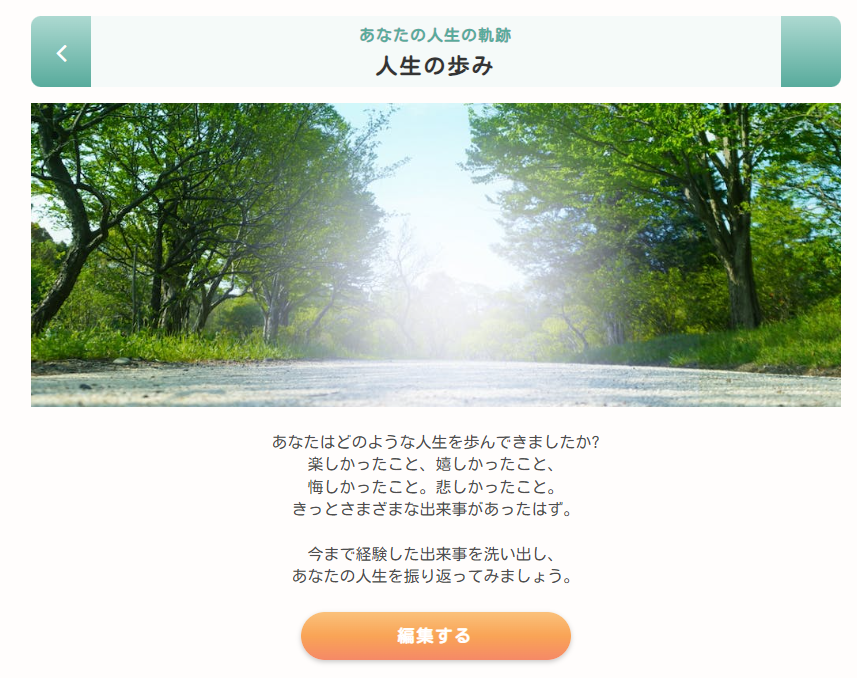
For more details, please check the link below:
https://reflectioncloud.achireth.onl/
Summary
A lifeline chart is a powerful tool for self-analysis and future planning. This article covered:
- The basic concept of a lifeline chart
- The importance of lifeline charts in career design
- How to create a lifeline chart
- Introduction to lifeline chart creation tools
Use a lifeline chart to visualize your life and find a path to a better future.
I hope this was helpful. Please feel free to follow me on social media or reach out with any questions.
Appendix
Reference Pages for Learning More About "Career Design"
https://kip-biz.com/career/lifeline-chart/
Recommended Books for Deeper Learning on "Career Design"
RefCla (Reflection Cloud)
For those who want to clarify their worries, anxieties, and vague concerns about the future. RefCla is a tool that supports people who want to transform their worries and anxieties into "positive action." It helps you naturally face yourself and supports effective introspection (reflection).
https://reflectioncloud.achireth.onl/
TIELEC aims to create a self-actualization society by improving reflective capabilities across all of society.
https://www.tielec.net/

Was this article helpful?

If this article helped you organize your thoughts
a coffee-sized support would be much appreciated.
※ This is separate from tipping, but—
If you'd like to organize similar themes in your own context, I also offer dialogue sessions as a form of thought organization.
Recommended for you