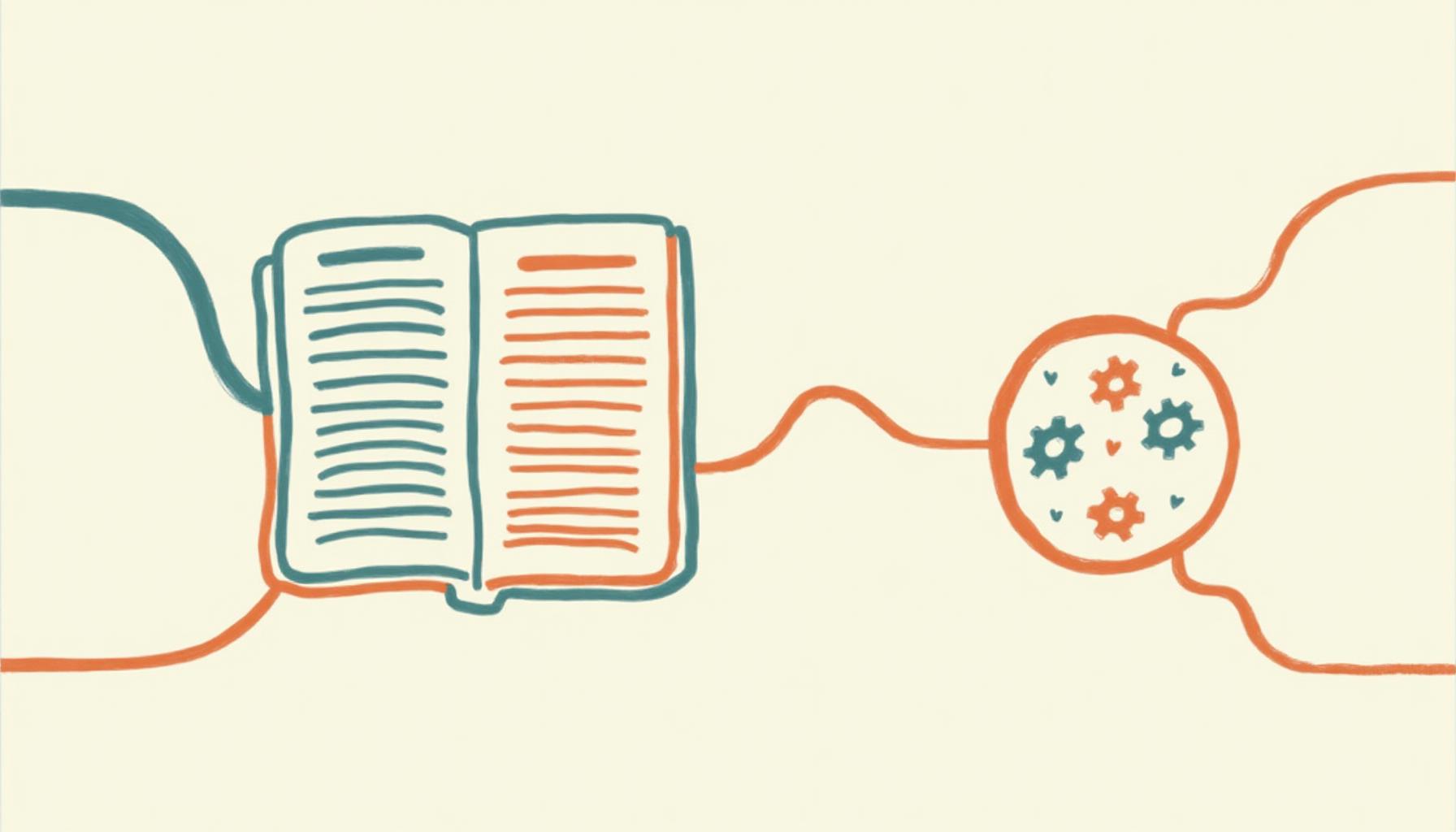
Can You Master Cooking Just by Following Recipes? Thoughts on AI Books
I'm not sure how well this will come together, but I wanted to write about something that's been on my mind lately.
A Strange Feeling on Amazon's Bookshelf
I've been using AI regularly for quite a while now. It's becoming indispensable both at work and in my personal life, which I think is a good thing.
However, when browsing books on Amazon, I sometimes feel an indescribable discomfort. Titles like "Instant Expert with ○○" and "Anyone Can Do ○○" are lined up in rows. There's an air of "let's publish a book to ride this boom."
Of course, I'm sure there are good books among them—ones that carefully explain how to write prompts that are useful at work. But somewhere inside me, something was nagging, saying "this isn't quite right," and for a while, I couldn't identify what it was.
The Message: "You Don't Need to Think"
After some reflection, I realized that what bothered me wasn't the quality of the books themselves, but rather the implicit message they were sending.
"Just use this prompt and you're good to go." "Follow these steps and anyone can do it." On the surface, this seems very helpful. But it also implies, "you don't need to think for yourself."
What's truly necessary to master AI isn't a template for "how to ask AI," but rather the thinking capacity that comes before—"why do we ask this way?" and "how should we question the answers?"
Whether you have the capacity for deep thinking determines if you can stand on the side of using AI, or if you'll become someone used by AI. The source of my discomfort, I realized, was a concern that books guiding people to skip thinking might inadvertently increase the number of people "used by AI."
Translating It to Cooking Recipes
This structure reminded me of cooking recipe books.
There's a recipe for delicious food, and if you follow it, it turns out delicious. This is a good thing. It's perfectly fine to refer back to recipes to check how to cook. There's no doubt this enriches our dining tables.
However, if you rely solely on recipes, you'll only ever be able to make "that dish." When you look in the refrigerator and think "what should I cook today?", you won't be able to adapt.
On the other hand, if you cook while asking questions like "why do we add seasonings in this order?" or "what's the purpose of preparing this vegetable this way?", your cooking naturally improves. Eventually, you'll be able to make reasonably delicious meals from whatever's in the refrigerator without needing a recipe.
This difference is significant.
The same applies to prompt books. There's a world of difference between books that simply say "use this prompt" and books that delve into "why does AI respond well to this phrasing?" and "how can this structure be applied to other situations?" The capabilities that develop in readers are completely different.
So if you were to publish something like a prompt collection, I think the book's meaning would change entirely with just one line in the "Introduction" or "Afterword": "Don't just use these prompts as-is—think about why they work" or "Sometimes, question the prompts themselves."
The Gap in Reflective Capacity
Thinking this through, I came back to the fundamental concern at my core.
I believe "the gap in reflective capacity" is a societal challenge. The ability to step back and observe one's own thoughts and actions. Whether you have this or not significantly changes the quality of work decisions, the nature of relationships, and life choices. And if each individual's reflective capacity increases, the total amount of compassion and love in society as a whole will grow. I believe this.
That's why I can't help but feel uncomfortable when things that implicitly send the message "you don't need to think" proliferate in the world.
However, what's important here is that reflective capacity cannot be forcibly elevated. This is something I've keenly felt while studying adult development theory, and it's also my personal conviction. Each person can only grow at the necessary timing. We cannot forcibly push people up developmental stages from the outside.
So what can we do?
Through engaging with Robert Kegan's theory, I've come to think that we can "set up environments." We can quietly prepare questions and spaces that become triggers for thinking. What happens next is up to each person. But whether that environment exists or not should gradually make a difference.
Cookbooks That Teach the "Why" of Recipes
Finally, in connection with the "cooking analogy" that sparked this reflection, I looked up cookbooks that align with my way of thinking. These are books that teach cooking principles, not just recipes.
『The Culinary Tetrahedron (料理の四面体)』 by Toyoo Tamamura (Chuokoron-Shinsha)
This is a rather bold book that structurally explains all cuisines in the world through four elements: fire, water, air, and oil. Rather than teaching individual recipes, it provides "axes" for classifying cuisine. It's interesting that it draws inspiration from Lévi-Strauss's structuralism. This is precisely the kind of book that cultivates "the ability to assemble dishes from what's in your refrigerator."
『Salt Fat Acid Heat』 by Samin Nosrat
This book scientifically explains cooking through four basic principles: salt, fat, acid, and heat. For example, it explains the reasons for salting meat with solid evidence. It's permeated with the philosophy that understanding principles allows you to create the flavors you want without recipes, and it's become a global bestseller with over 1 million copies sold worldwide.
『Ideas and Thinking in Cooking (料理のアイデアと考え方)』 Series by Shibata Japanese Cuisine Study Group (Shibata Publishing)
This series features nine Japanese chefs discussing their approaches to ingredients in roundtable format. Volume 1 focuses on 12 vegetables, and Volume 2 on 12 seafoods. While recipes are included, the main focus is showing each chef's "thought process"—what characteristics of the ingredients they focus on, what they aim to express, and how they translate that into cooking. The books show the actual act of cooking itself. They also include scientific explanations by agricultural science PhDs, which is interesting because it allows you to understand "deliciousness" not just through sensation but structurally.
What's common to all these books is that they try to convey "ways of thinking" rather than "answers." By understanding why a dish is the way it is rather than just following recipes, you become able to create your own dishes.
I don't think this is limited to cooking.
Check out the books mentioned above
Was this article helpful?

If this article helped you organize your thoughts
a coffee-sized support would be much appreciated.
※ This is separate from tipping, but—
If you'd like to organize similar themes in your own context, I also offer dialogue sessions as a form of thought organization.
Recommended for you