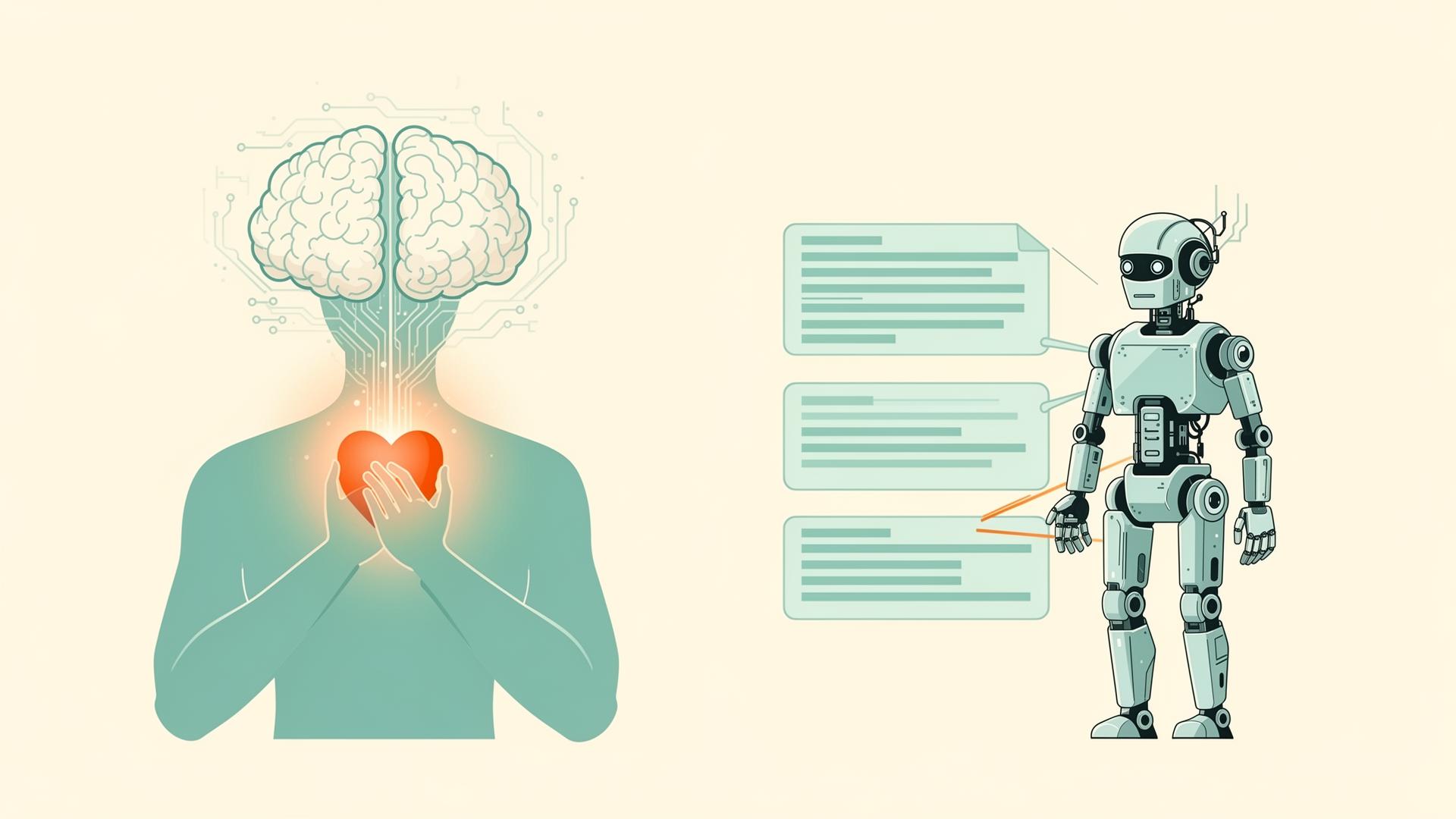
What is the Essence of Information Dissemination in the AI Era?
There's something that's been on my mind lately.
Now that writing with AI has become commonplace, what exactly is "valuable information"?
Specifically, I had two questions.
The first is: will writing that gathers various information, reconstructs it, and adds one's own thoughts be properly valued?
The second is: does writing rich in personal experiences and thoughts but containing typos or temporal inconsistencies lack value?
Behind these questions lies a discomfort I've felt for a long time.
Does content like curation sites that merely compile information really have value? Rather, isn't it more important to properly convey what a person has experienced and learned? That's what I've been thinking.
AI Rewriting Leads to "Homogenization"
That said, there are practical challenges.
No matter how much you write about your own experiences and thoughts, polishing the final product for reader accessibility is necessary. Using AI to rewrite for this purpose is already common practice, I believe.
However, this creates a problem.
Everything converges into something that feels "AI-generated."
When text amounts in each section become roughly equal, the same rhythm and expressions continue throughout. Common phrases appear in sequence, and charts that humans wouldn't create get inserted. Seeing these patterns, you start to sense that "maybe AI wrote this."
Human-specific fluctuations, rhythmic variations, even occasional typos—all the human qualities get stripped away, and everything settles into a similar atmosphere.
Such articles may certainly be easy to read. But is that really okay? The question remains.
But I Want to Use AI
However, honestly, I want to leverage AI more myself.
The reason is simple: there's far too much I don't know.
Using AI allows quick research and information organization. Looking at that content, I can then think about something new. This accelerated cycle is a very good thing, I believe.
So "not using AI" isn't an option for me. It goes against the flow of the times, and rather, creating valuable information while using AI seems more meaningful.
"What to Write" vs. "How to Write"
While contemplating this contradiction, I had a realization.
"How to write" and "what to write" are different things.
"How to write" can be done by anyone through AI rewriting. Easy-to-read sentences, well-organized structure, appropriate expressions—these are now areas AI handles.
But "what to write" is different.
What a person has experienced, felt, and learned—these are things only limited individuals possess.
In the first place, knowledge rarely comes from thinking alone. It's built on what exists in the world, with personal experiences and other elements stacked on top, creating value for the first time. That's when it becomes polished.
When you think about it that way, even if AI polishes the expression, as long as "what to write" is solid, the value isn't lost.
For those who want to delve deeper into the essence of "thinking," I recommend this book.
30% Originality
So how original does something need to be to be considered "valuable"?
In my sense, if about 30% of the whole contains original parts, I think it's fair to judge it as having uniqueness.
Even if there's overlap with existing information in the world, that's natural. Rather, 100% original knowledge hardly exists.
What's important is properly conveying what a person has experienced and learned. If that part accounts for even 30%, it's sufficiently valuable information dissemination, I think.
Externalizing the Thinking Process
Recently, what I've been doing is deepening knowledge through dialogue with AI and publishing that thinking process itself on my blog.
When there's something I want to know deeply or think about, I organize my thoughts through dialogue with AI. Then I turn that process itself into an article.
Honestly, sometimes it takes courage. I sometimes wonder, "might there be risks in publishing this as is?"
But looking at it from a broad perspective, I think it's better to make the judgment to publish what should be published.
Whether to externalize the thinking process or keep it closed and unseen by anyone—that's the key point, but I want to choose publication.
What Hasn't Changed Since Long Ago
Writing this, I realized that my stance of writing original, valuable things hasn't changed since long ago.
While I want to leverage AI, that core doesn't waver.
What is the essence of valuable information?
In the end, I think it's "conveying what a person has experienced and learned."
Precisely because we're in the AI era, I want to remember this essence.
If you resonate with the approach discussed in this article—"polishing expression with AI while valuing what to write"—you might find "Rakurin," a blog-focused AI writing tool, helpful. It's a well-balanced tool designed with the premise that human editing is necessary, rather than complete automation.

Was this article helpful?

If this article helped you organize your thoughts
a coffee-sized support would be much appreciated.
※ This is separate from tipping, but—
If you'd like to organize similar themes in your own context, I also offer dialogue sessions as a form of thought organization.
Recommended for you