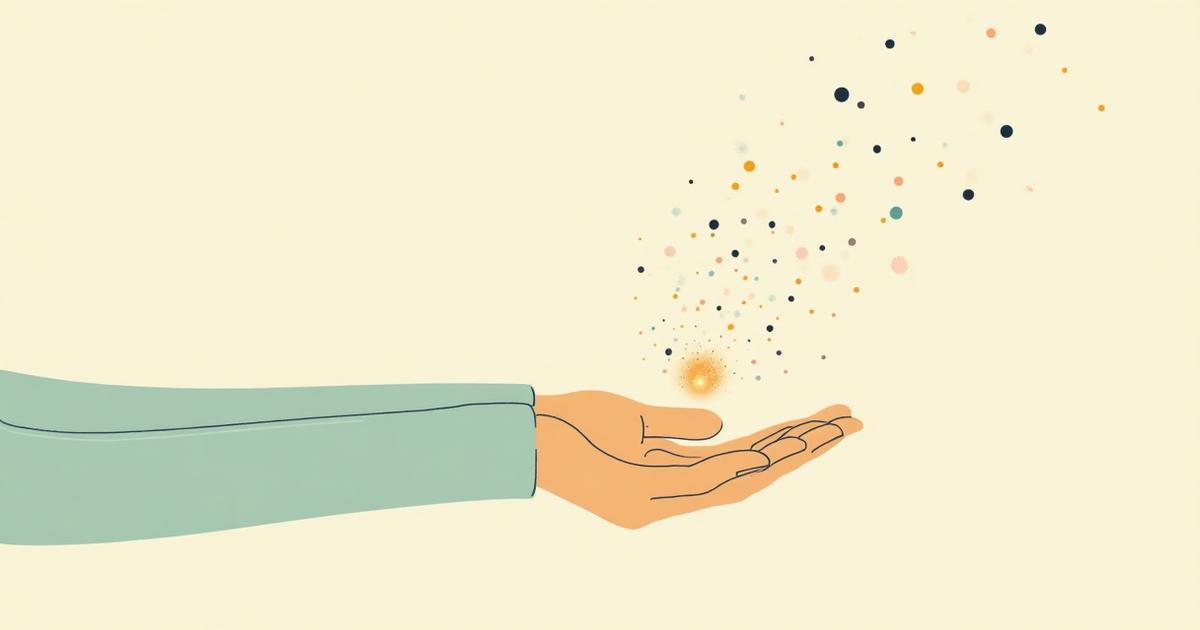
Acceptance Without Expectation
This might be a somewhat disorganized piece, but I'd like to share what I've been thinking about recently.
Arriving at the Same Answer
"They won't change."
When we face this kind of frustration, we ask ourselves the same questions over and over. How should I communicate? How can I make them understand? We think, we try, we think again—but nothing changes.
Eventually, we realize: no matter how many times I think about it, I arrive at the same answer.
The analysis is done. The structure of the problem is clear. But that doesn't solve anything. In fact, seeing it clearly only makes the helplessness more acute.
The Difference Between Expectation and Hope
Something I've been conscious of recently:
I've let go of expectations, but I still hold hope.
These two may seem similar, but they're fundamentally different.
Expectation assumes the other person will change. "They should do this." "If I say it this way, they'll understand." But when that doesn't happen, we feel disappointed. And then we expect again, and feel disappointed again. This cycle is exhausting.
Hope is different.
It's okay to want someone to change. But whether that happens is beyond my control. So, I hold hope, but I don't cling to it.
When I understood this distinction, I felt a little lighter.
Not Trying to Control
It's better not to try to control what cannot be controlled.
Trying to change someone else. Trying to change a situation. But these are beyond our control. No matter how much energy we pour in, what won't change won't change.
So what do we do?
There's the option to "let it be."
This phrase might sound negative, but what I mean isn't abandonment or indifference. It's simply recognizing the boundary between what I can control and what I cannot, and releasing my grip.
Perhaps a more elegant way to say it would be "entrust" or "watch over." But the actual feeling is rawer than that. It's the simultaneous presence of "I can't do anything about this anymore" and "I'm choosing to stay engaged anyway."
The outcome might be good. It might be bad. But this is part of my life.
Yet, the Hope Remains
The tricky part is that even after deciding to "let it be," the hope remains.
If it were just anger or frustration, it would be simple. But the hope that they might change is still there. That's what makes it hard to break free.
I can't become indifferent, so I end up caring again. And then the cycle repeats.
I can see this structure. But I can't escape it.
Maybe that's okay. Holding hope while letting go of expectations—this balance isn't easy, but it's what I can do right now.
Speaking Out, Bouncing Ideas
No matter how much I reflect internally, sometimes I want to talk to someone.
I'm not looking for a new insight. I'm not seeking an answer. It's just that something stressful happened today around this issue, and I wish things could be different, so I want to put it into words.
If there's someone I can talk to, that's ideal. But that's not always the case. Or sometimes, precisely because they're close to me, it's harder to talk.
In those moments, seeking counseling or coaching is an option. There are things you can say to a disinterested third party that you can't say to others. Even just being heard, as a sounding board, can help bring clarity.
And yet, I might still arrive at the same answer.
Maybe that's fine. Reflection isn't just about finding new answers—it's also the process of confirming the same answer over and over, and continuing forward anyway.
Protecting Yourself
"Letting it be" and "letting yourself be worn down" are two different things.
The same situation will come again. When it does, how do I protect myself? It might be worth thinking about that, at least a little.
The other person might not change. The situation might not change. But how I engage with it can change.
Let go of expectations. But keep holding hope.
That's what I can do right now.
Ancient and Modern Wisdom
After writing this, I did a bit of research and was surprised.
The idea of "distinguishing what you can control from what you cannot" has actually existed since ancient times.
In ancient Stoic philosophy, Epictetus and Marcus Aurelius taught the "Dichotomy of Control." The only things we can control are our own judgments and actions. We cannot control other people or external circumstances. So focus on what you can do, and accept what you cannot.
And in modern times, the psychotherapy developed in the 1980s called "Acceptance and Commitment Therapy (ACT)" arrived at the same core insight. While traditional cognitive-behavioral therapy emphasized "controlling emotions," ACT emphasizes "accepting emotions" (acceptance). Rather than trying to control them, we accept them while committing to value-driven action.
Ancient philosophy and modern psychology point to the same answer.
Honestly, I don't know much about Stoicism or ACT yet. I'd like to study them. But knowing that the approach I arrived at through trial and error has been articulated for thousands of years is oddly reassuring.
Perhaps the fundamental challenges we face as humans haven't changed much at all.

Was this article helpful?

If this article helped you organize your thoughts
a coffee-sized support would be much appreciated.
※ This is separate from tipping, but—
If you'd like to organize similar themes in your own context, I also offer dialogue sessions as a form of thought organization.
Recommended for you